Keeping up with Standards: On PhilHealth, HMOs, and Employee Benefits
- Feb 28, 2023
- By ALLCARE Team
Attracting and retaining talents takes more than a good offer and health insurance coverage. Companies need to do better in providing an ideal work environment and culture that fosters growth both for the business and its people. Skimming through hiring posts, here are three unpopular opinions which sparked conversations in workplace forums:
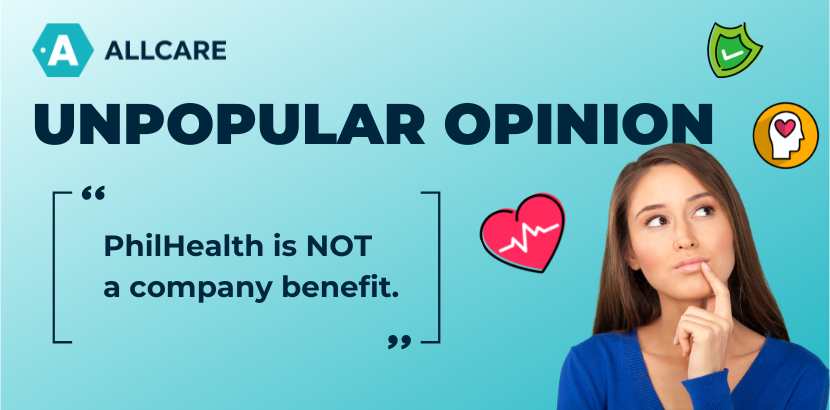
PhilHealth is not a company benefit. Stop communicating this to prospective hires. It is government-mandated health insurance. Its impact to attract talents is as hard-hitting as the landing of a fly. Every law-abiding employer understands that this is as normal and legal as employees who are paying their income taxes, as they should. But one can still leverage PhilHealth by having systems in place to ease the process of application or updating information for their employees.
HMO is the bare minimum. HMOs are private companies that offer comprehensive healthcare services to their members for a fee. It is usually given as a benefit to employees upon regularization. Depending on the arrangement, payment for premiums can be covered by the employer, shared by employer and employee, or fully deducted from the employee’s salary (with the third arrangement defeating the logic of employee benefits). In this day and age, having an HMO is an indicator of financial stability. Having one is good enough to tick one of many boxes on a top talent’s wish list.
Employee Benefits define work culture. Yes, HMOs are a popular choice for employers as a form of employee benefits but if it’s the only card on the table, we’re barely scratching the surface. Employee benefits are designed by employers to attract and retain top talent, improve employee morale and productivity, and foster a positive workplace culture. It can take many forms like paid time off, flexible work arrangements, wellness programs, and even heartbreak leaves! A good employee benefits program is designed to address the needs of employees and is patterned to the DNA of the company's unique work culture.
PhilHealth and HMOs are placed to financially help employees when they’re sick. But on a daily, they’re healthy and productive. Employers would want them to enjoy benefits for their overall health and wellness. It’s time to look at employee benefits from an employee standpoint and to start giving relevant and holistic perks in the workplace.
Related Articles
Feb 28, 2021

Dec 10, 2019
Apr 29, 2021

Mar 22, 2020

Jun 05, 2020